FREE SHIPPING for all orders over $40
FREE SHIPPING for all orders over $40
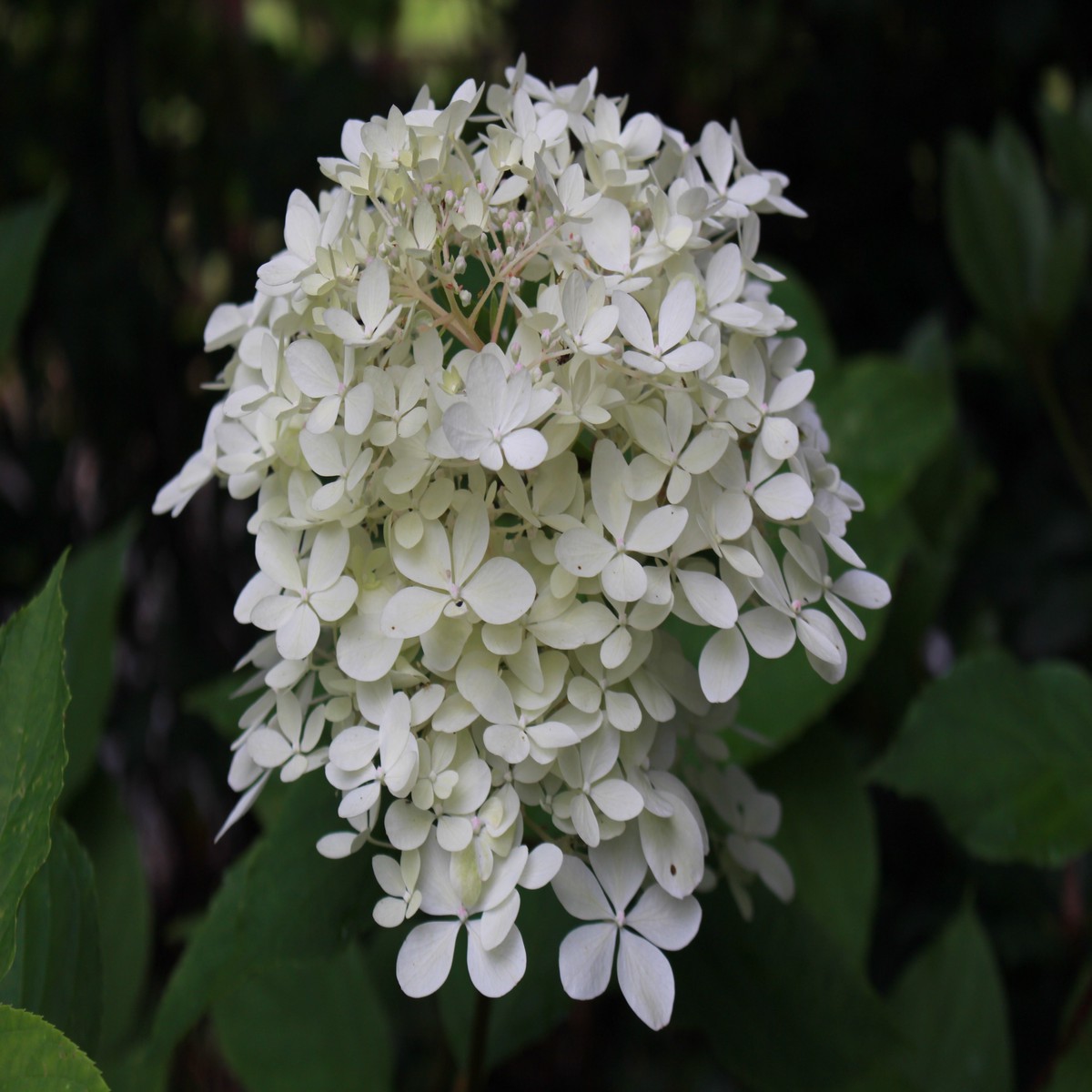
Hydrangea paniculata Phantom is a Royal Horticultural Society Award of Garden Merit winner introduced by Pieter Zwinenburg ofHolland in1990. Possibly thelargest flower heads of any paniculata cultivar, theycarryingcream coloured plume-shaped flowers. Quite an impact!
Hydrangea (hy-dran-je-a) get its name from the Greek hydor, water, and aggeion, a vessel, or vase, in reference to the shape of the seed capsule.Itis a classic garden plant. The genus Hydrangea contains about 75 species of shrubs, trees and woody vines, along with hundreds of named cultivars. Hydrangeas are grown primarily for their large flower clusters that vary in shape from flat lacecaps, to long panicles, and large, round mopheads.
At Ballyrobert we only really grow cultivars from the speciespaniculata (pointed panciles of flowers) and arborescen (mopheads of flowers).You may read lots of different things aboutpruningpaniculatacultivars. We findthe best thing to do is shear them back hard to about three feet from ground level in March (spring) each year. For the mop-headedHydrangeaarborescen cultivars we cut them back furtherto ground level each March.Strange, as the name (arborescen means ‘tree like’) would imply you leave them alone…..
Hydrangeas grow best insun or partial shade and are not too fussy regarding soil (as long as it isn’textreme). We typically grow them in mixed borders, and in our garden at Ballyrobert we have them almost everywhere!
Only logged in customers who have purchased this product may leave a review.
 -20%
 -20%
 -20%
 -20%
